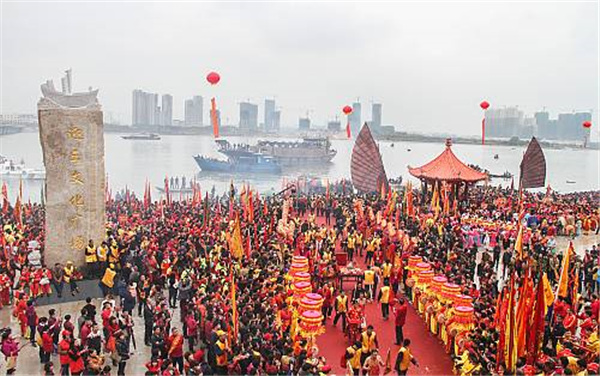
Wangchuan Ceremony
Introduction
The Wangchuan Ceremony, also known as Ong Chun, is a traditional cultural practice originating from the Minnan region of China, specifically the coastal areas of Xiamen and Quanzhou in Fujian province. This ceremony is deeply rooted in the folk customs of worshipping Ong Yah, a deity believed to protect individuals and their lands from disasters. The ritual has transcended its origins and is now also celebrated in the Chinese communities of Melaka, Malaysia. The practice involves a series of performances and rituals that honor those who have died at sea and foster a sense of harmony between humans and the ocean.
The Wangchuan Ceremony, was jointly put forward for UNESCO intangible cultural heritage status by China and Malaysia, and was added to the list in 2020.
History
The Wangchuan Ceremony developed between the 15th and 17th centuries in southern Fujian province and has since evolved to become a significant cultural tradition in the coastal areas of Xiamen Bay and Quanzhou Bay. The ceremony's historical roots lie in the collective memory of ocean-going ancestors and the social connections formed in response to maritime emergencies such as shipwrecks. The practice was introduced to Melaka by Fujian emigrants in the 19th and early 20th centuries, where it took root and became a part of the local cultural landscape.
Rituals
Preparations
Preparations for the Wangchuan Ceremony begin with the gathering of community members at the seaside to welcome Ong Yah to local temples or clan halls. Erecting lamp poles to summon the 'good brothers'—the lonely and wandering souls of those who died at sea—is a crucial part of the preparations. These acts are deeply symbolic, representing the community's commitment to 'doing good deeds' and offering peace to the departed.
Main Ceremony
The main ceremony involves a procession led by various performances that clear a path for Ong Yah's barge, which can be either a wooden or paper model. The procession includes elaborate displays such as gaojia and gezai opera, dragon and lion dances, and puppet shows. These performances are not only entertaining but also carry cultural and historical significance, serving as a reminder of the community's ancestral heritage and its connection to the sea.
Participants
Participants in the Wangchuan Ceremony include local community members, performers and cultural enthusiasts who gather to pay their respects and celebrate their shared heritage. The ceremony is also a platform for intercultural exchange, with participants from diverse ethnic backgrounds, particularly in regions like Melaka, where Chinese, Malay, and Indian communities come together to partake in the festivities.
Influence and Preservation Efforts
The Wangchuan Ceremony holds immense cultural significance as it serves both as a memorial for those who perished at sea and as a celebration of the harmonious relationship between humans and the ocean. It reflects the intercultural dialogue that occurs within and between communities, particularly between Chinese and Malaysian cultures. The practice is also seen as a means of preserving historical memory and fostering social cohesion in the face of emergencies.
Efforts to preserve the Wangchuan Ceremony include organizing regular ceremonies, establishing museums dedicated to the practice, and fostering cross-border collaborations between China and Malaysia. The preservation of this cultural heritage is seen as a vital means of maintaining historical continuity and promoting cultural diversity.








